
Making treatment easier for kids with cancer
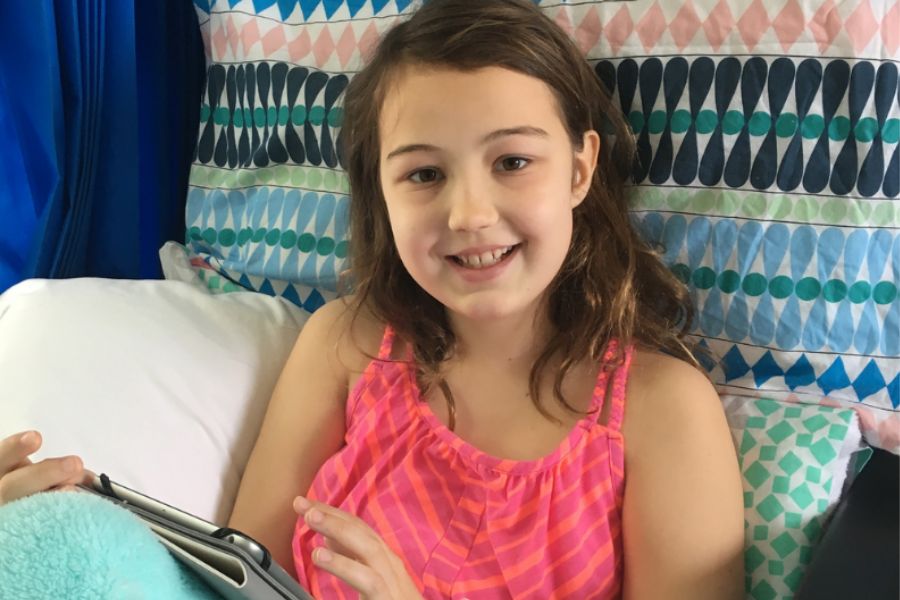
Lucy Francazio, aged 11, during treatment at Monash Children’s Hospital. Photo courtesy of Lucy Francazio.
The Children’s Cancer CoLab (CoLab)’s Transformative Therapies Impact Program has awarded grants to 4 research teams.
The teams are looking into options for fighting childhood cancer that are more targeted, more effective and less toxic. The funded projects are:
- Professor Vihandha Wickramasinghe from the Walter and Eliza Hall Institute of Medical Research (WEHI): exploring mRNA-based therapies to help suppress tumours and support the development of treatments that may one day be taken at home.
- Professor Lee Wong from Monash University: investigating ways to slow and control the growth of high-grade glioma – a fast-growing and aggressive childhood cancer.
- Dr Deborah Meyran from the Peter MacCallum Cancer Centre: investigating a new drug to help the immune system fight high-risk tumours.
- Professor Paul Monagle from the University of Melbourne and Murdoch Children’s Research Institute (MCRI): examining ways to reduce the risk of blood clots to make a common childhood leukaemia treatment safer.
Each year, more than 1,000 children and adolescents in Australia are diagnosed with cancer. Most current cancer treatments were originally developed for adults. As a result, they are less effective in young patients and may cause lifelong side effects.
Lucy Fay Francazio was diagnosed with Stage III anaplastic large cell lymphoma at age 11. Now, as a young adult, she faces cognitive fatigue and working-memory challenges linked to her treatment.
CoLab’s Transformative Therapies Impact Program aims to:
- make children’s cancer treatments more effective
- reduce these long-term and painful side effects.
The funded teams will explore how to improve quality of life for people like Lucy.
CoLab is driving cutting-edge research to tackle childhood cancer. It was backed by a $35 million investment from the Victorian Government, a $10 million commitment from the Children’s Cancer Foundation and a $10 million commitment from My Room Children's Cancer Charity.
Read more about Lucy’s story on the Children's Cancer CoLab website.